A residential electrical subpanel installation resolves circuit capacity limits by establishing an independent distribution point downstream from the primary utility service. In dense Los Angeles County neighborhoods…
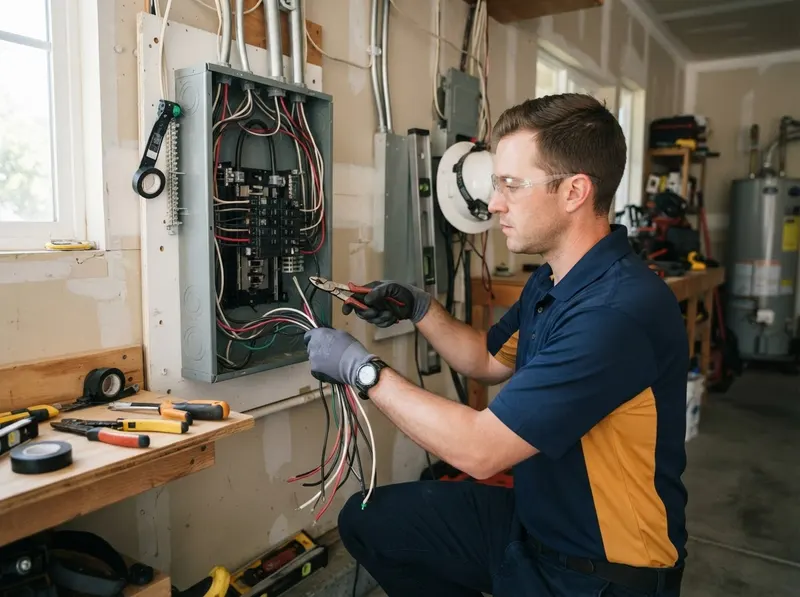
A residential electrical subpanel installation resolves circuit capacity limits by establishing an independent distribution point downstream from the primary utility service. In dense Los Angeles County neighborhoods from Echo Park and Silver Lake to Venice and Mar Vista, single-family structures frequently operate on legacy 100-amp main panels that lack physical bus space for new branch breakers. Adding a subpanel creates between 8 and 30 additional circuit slots without requiring an immediate, expensive utility-side meter redesign, provided the existing service load calculation complies with National Electrical Code (NEC) Article 220. If total household electrical demand exceeds the main service rating, a primary panel modernization to 200 amps is required instead; if the service capacity exists but physical knockouts are depleted, a subpanel is the correct, cost-effective mechanical solution.
Local architectural footprints dictate precise installation methods across Los Angeles. In hillside communities like Studio City, Sherman Oaks, and Los Feliz, detached garage conversions and backyard workshops often require secondary subpanels fed via underground schedule 40 PVC conduit trenched at a minimum depth of 18 inches per local municipal amendments. For historic bungalows in Highland Park and Boyle Heights, interior subpanels must maintain dedicated working clearances: a 30-inch-wide horizontal space, a 36-inch clear depth in front of the door, and 78 inches of vertical headroom, precluding placement inside clothes closets or bathrooms under California Electrical Code Title 24 guidelines.
Code compliance requires explicit grounding and bonding separation inside all secondary panels. Unlike a main service panel where neutral and equipment grounding conductors share a single bonded busbar, a residential subpanel requires fully isolated neutral terminals, a four-wire feeder system (two ungrounded conductors, one insulated neutral conductor, and one separate equipment grounding conductor), and the removal of the green main bonding jumper. Detached structures in Westwood or Venice also require an auxiliary grounding electrode system, typically two 5/8-inch copper-coated ground rods driven 8 feet deep and spaced at least 6 feet apart, inspected and permitted through the Los Angeles Department of Building and Safety (LADBS).
Every job gets a firm, written price after a free on-site visit.
Tell us about your residential electrical subpanel installation job in los angeles and we'll send a clear, written quote, usually the same day.
 Elite Electrician